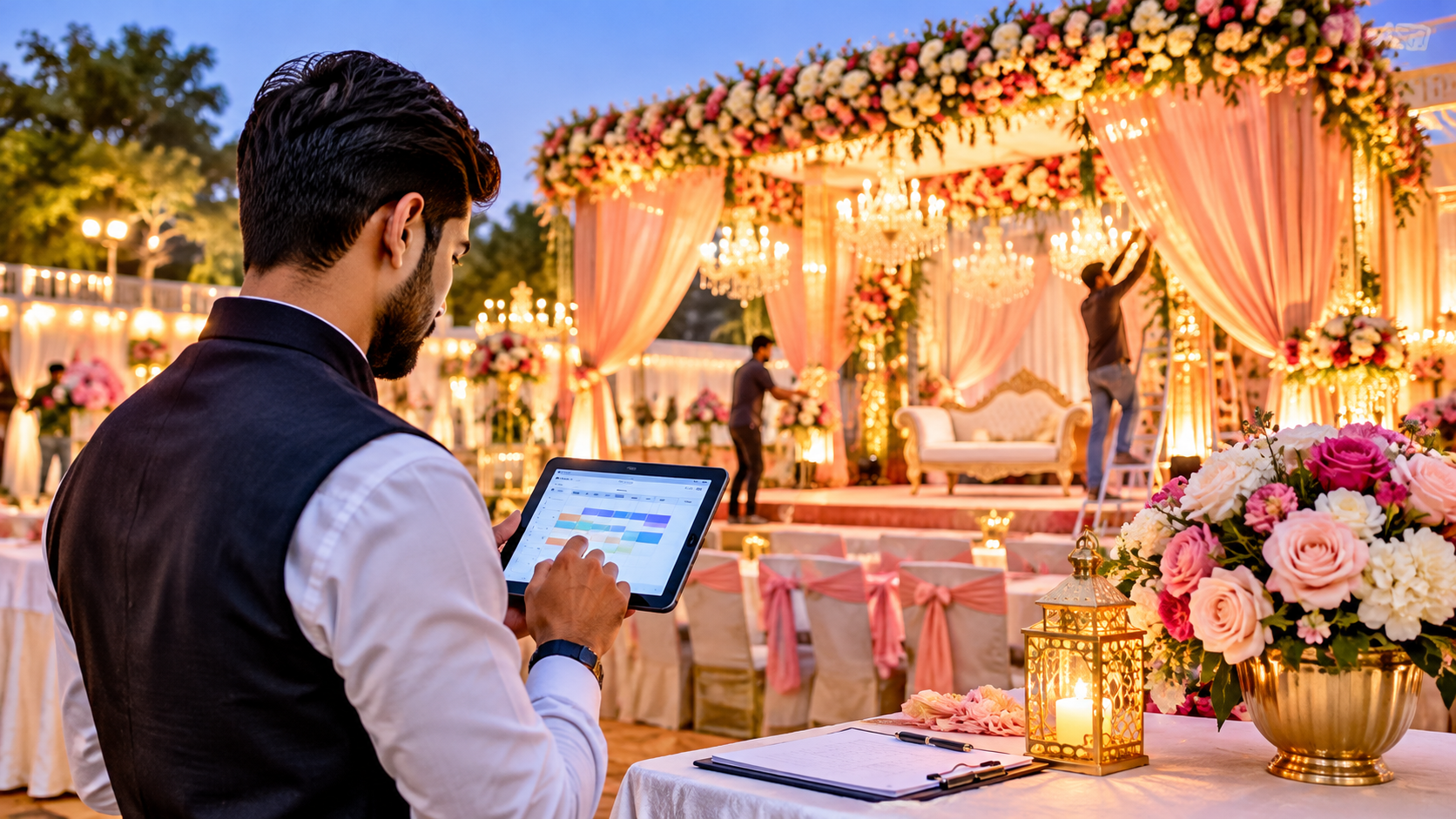
Wedding Decoration Business Management
A practical guide for wedding decorators to organize enquiries, quotations, decoration materials, team assignments, client changes and payments during a busy season.

मेहंदी आर्टिस्ट अपनी ब्राइडल बुकिंग और टीम कैसे मैनेज करें?

Key Takeaways & Executive Summary
The main points at a glance
- Record the event date, venue, decoration scope and client requirements before preparing a quotation.
- Break quotations into clear items, quantities, inclusions, exclusions and payment terms.
- Separate reusable stock, consumables and hired materials before allocating items to overlapping events.
- Assign a site lead, crew responsibilities, transport and setup timings for every event.
- Record client changes, material returns, extra costs and pending payments before closing each job.
- 1.Why a Decoration Business Needs a Clear System
- 2.Record Every Enquiry Before Preparing a Quote
- 3.Prepare a Clear Decoration Quotation
- 4.Track Decoration Materials and Stock
- 5.Plan the Team and Setup Schedule
- 6.Manage Client Changes and Payments
- 7.Use an Event-Day and Return Checklist
- 8.Manage Your Decoration Business with LaganBook
- 9.A Simple Checklist for Every Wedding Decoration Booking
- 10.Final Thoughts
- 11.Frequently Asked Questions
Why a Decoration Business Needs a Clear System
The work starts before the setup team reaches the venue
A wedding decorator manages much more than flowers, backdrops and stage design. Each booking can involve a client discussion, design approval, quotation, material planning, transport, setup, a team and a payment schedule. When several events fall on nearby dates, these tasks can overlap.
A missed design detail can lead to a last-minute purchase. An item reserved for one venue may be loaded for another event. A verbal change can create extra work without a matching change in the bill. These problems are easier to prevent when every event has one clear record.
The aim is not to add paperwork. It is to make sure the client requirement, agreed price, materials, people and payment status stay connected from the first enquiry to the final settlement.
- Keep one record for each event rather than relying on scattered messages.
- Check date, material and team availability before confirming a booking.
- Record changes and approvals so the client and team are working from the same plan.
“A well-managed decoration job is planned at the enquiry stage, not on the day of the wedding.”
Record Every Enquiry Before Preparing a Quote
Collect the details that affect design, cost and execution
Do not prepare a final quotation from a short message such as “stage decoration chahiye.” First understand what the client expects and what the venue allows. A short enquiry form or checklist can help your team collect the same information every time.
Ask whether the requirement is for a wedding stage, mandap, entrance, varmala setup, welcome area, dining area, table centrepieces, floral decoration, lighting or a combination. Confirm the event date, function timing, venue address, setup access and whether the decoration is indoors or outdoors.
Save reference photos, preferred colours, theme notes, approximate guest count and the client's budget range. Also note who will approve the design and who will coordinate at the venue. These details reduce repeated calls and avoid assumptions.
- Client name and contact number.
- Event date, function type, venue and setup access time.
- Decoration areas and item-wise requirements.
- Theme, colour palette, reference images and design approval status.
- Budget range, special instructions and on-site contact person.
Prepare a Clear Decoration Quotation
Make inclusions, quantities and extra charges easy to understand
A quotation should explain what the client is paying for. Instead of writing only “wedding decoration package,” break the work into understandable sections. For example: stage backdrop, mandap, entrance gate, floral arrangements, lighting, table decoration, transport, installation and dismantling.
Mention the quantity or coverage wherever it matters, along with the selected design or package, rate and amount. State what is included and what is not included. If fresh flowers, special props, generator power, venue permissions or additional setup time are not part of the quote, make that clear.
Add the quotation date, validity, payment milestones, cancellation or date-change terms and the process for approving design changes. When the client asks for an addition, send an updated quotation or written change confirmation rather than relying on a verbal agreement.
- Separate major decoration items and services into clear line items.
- Mention transport, labour, setup and dismantling where applicable.
- Show optional add-ons separately from the agreed package.
- Write payment terms, validity and exclusions in simple language.
- Keep the approved quotation linked to the booking record.
Track Decoration Materials and Stock
Know what is usable, reserved, hired or consumed
Decoration businesses may use reusable structures, frames, stands, lights, artificial flowers, fabrics and props alongside consumables such as tape, zip ties, foam and disposable fixing material. Some items may also be hired from another vendor for a particular event. These groups should not be mixed into one stock number.
Before confirming material for an event, check the usable quantity and existing reservations for the same date. A simple availability calculation is: usable stock minus quantities already reserved for overlapping events. Do not count items that are damaged, under repair or still out at another venue as available.
For every dispatch, record the event, item, quantity, condition and person responsible. After dismantling, compare the returned quantity with the dispatch record. Mark missing, damaged and repair-required items immediately so the next booking is planned with the correct stock position.
- Reusable stock: frames, stands, structures, lights, props and reusable décor.
- Consumables: flowers, tape, fasteners, foam and other materials used up during setup.
- Hired-in items: materials sourced from another decorator or supplier for a specific event.
- Movement record: opening quantity, reserved quantity, dispatched quantity, returned quantity and damaged or missing quantity.
“A stock record is useful only when dispatch and return entries are updated after every event.”
Plan the Team and Setup Schedule
Give every event a clear on-site owner
A decoration plan should identify who is responsible for design coordination, material loading, installation, electrical work, flowers, finishing and dismantling. One person should act as the site lead and know the approved layout, venue contact and setup deadline.
Share the event plan with the team before dispatch. Include the venue address, reporting time, vehicle details, loading list, setup sequence, phone number of the site contact and any venue restrictions. Keep the plan practical: the crew should be able to understand what has to be installed and in which area.
When two events are scheduled close together, check whether the same workers, vehicle, tools or materials are required at both places. Resolve the conflict before the event day instead of depending on last-minute arrangements.
- Assign a site lead and specific responsibilities to each team member.
- Confirm crew availability, transport and tools against the event schedule.
- Share the approved design and material loading list before dispatch.
- Plan dismantling, return transport and the next event's material requirement.
Manage Client Changes and Payments
Keep every approval and amount connected to the booking
Decoration requirements can change after the first discussion. The client may add flowers, extend the stage, change the colour palette, add an entrance setup or request extra lighting. Before accepting a change, confirm whether it affects material, labour, transport, setup time or the total price.
Record the change in a message, revised quotation or booking note and obtain the client's approval. This gives the team one agreed version to follow and helps prevent disputes about what was included in the original price.
Set payment milestones that suit the size and terms of your business. Record the amount received, date, payment method and balance due. Follow up before the event and again after completion where a balance remains. Do not treat a verbal promise as a payment entry.
- Record the agreed advance and remaining payment schedule.
- Update the quotation when the scope or quantity changes.
- Save payment receipts and note the balance after every transaction.
- Review pending payments before marking the event as financially closed.
Use an Event-Day and Return Checklist
Close the job before moving on to the next booking
Before the team leaves the venue, check the approved design areas, finishing, lighting and client sign-off. Keep a note of any incomplete work or approved last-minute addition. This makes the handover clear for the client and the site team.
After dismantling, reconcile the dispatched and returned materials. Record consumables used, missing or damaged items, repair needs, supplier or hired-item charges and any extra labour or transport cost. Update the stock record before promising those items to another event.
Finally, compare the amount quoted with the actual costs and payments received. A job-level record helps you understand which decoration packages, materials and types of work are contributing to the business and where costs need attention.
- Before handover: inspect the setup and confirm the agreed scope.
- After dismantling: count returns and note damage, loss or repair.
- Financial close: record extra costs, supplier bills and remaining client balance.
- Next booking: release only the stock that has actually returned and is usable.
Manage Your Decoration Business with LaganBook
Keep bookings, quotations, stock and payments organized
When bookings, quotations, material notes and payment details are spread across separate diaries and chat threads, it becomes difficult to see the complete status of an event. LaganBook is built for event service providers who need a more organized way to manage everyday business work.
With LaganBook, decoration businesses can maintain booking details, prepare and share quotations, keep track of stock movement, record income and expenses, manage team information and follow up on payments. The goal is to keep the important business records connected to the event instead of searching through separate notes.
Start by entering your confirmed and upcoming events, then add the agreed quotation, material requirements and payment status. As the event progresses, update dispatch, returns, changes and outstanding amounts. A consistent process makes it easier to manage a busy wedding season and prepare for the next booking.
- Booking records for client events and dates.
- Digital quotations and billing records.
- Stock, dispatch and return tracking.
- Team and event information.
- Income, expenses and payment follow-ups.
“One event should have one clear record—from the first enquiry to the final payment.”
A Simple Checklist for Every Wedding Decoration Booking
Use the same process from enquiry to close-out
A repeatable checklist helps the owner, office team and on-site crew work from the same information. Adjust it to the scale of each event, but do not skip the booking, material, team and payment checks.
- Enquiry: capture date, venue, event type, design brief and contact details.
- Quotation: itemize the scope, quantities, price, exclusions and payment terms.
- Confirmation: record client approval and the agreed booking terms.
- Planning: reserve usable materials, assign the crew and confirm transport.
- Execution: share the approved plan and complete the site handover.
- Close-out: reconcile returns, record actual costs and follow up on the balance.
Final Thoughts
A wedding decoration business grows more easily when creative work is supported by clear booking, quotation, material, team and payment processes. You do not need a complicated system to begin: use one reliable event record, update it when something changes and close it after the materials and payments are checked.
Explore LaganBook to organize the day-to-day work behind your decoration business and keep your next wedding booking on track.
Frequently Asked Questions
Direct Answers & Industry Standards
Q:How can a wedding decorator manage multiple bookings?
Maintain one booking calendar and create a separate work record for every event. Record the date, venue, decoration scope, material allocation, team lead, quotation and payment status. Check overlapping dates before confirming availability.
Q:What should a wedding decoration quotation include?
List the decoration areas and items, design or package details, quantities, rates, setup and dismantling, transport, labour, optional add-ons, exclusions, payment terms and quotation validity. This helps the client understand exactly what is included.
Q:How do wedding decorators avoid material shortages?
Keep an updated record of usable stock, items already reserved for other events, materials sent out, returns and damaged items. Separate reusable equipment from consumables and hired materials so the same stock is not promised to two events.
Q:How should decorators handle last-minute client changes?
Write down every change to the design, quantity, venue area or schedule. Confirm any extra cost and time with the client before carrying out the additional work, and update the event record and quotation.
Q:Can business software help manage a wedding decoration business?
A suitable business app can keep enquiries, bookings, quotations, material records, team details and payment follow-ups organized. LaganBook is designed to help event service providers manage these day-to-day business activities in one place.

LaganBook Editorial Team
Verified Industry ExpertEvent Industry Analyst
The LaganBook Editorial Team publishes practical guides for Indian event-service and rental businesses, covering bookings, stock control, quotations, billing and day-to-day operations.
Experience Zero-Clash Bookings & 10-Second WhatsApp Quotes
Built for Indian tent house, DJ sound, and wedding decor businesses that want faster, smoother operations.
Recent Event Industry Articles
मेहंदी आर्टिस्ट अपनी ब्राइडल बुकिंग और टीम कैसे मैनेज करें?
बैंक्वेट हॉल और मैरिज गार्डन की बुकिंग कैसे मैनेज करें?
शादी के बैंड-बाजे का व्यवसाय कैसे संभालें?